
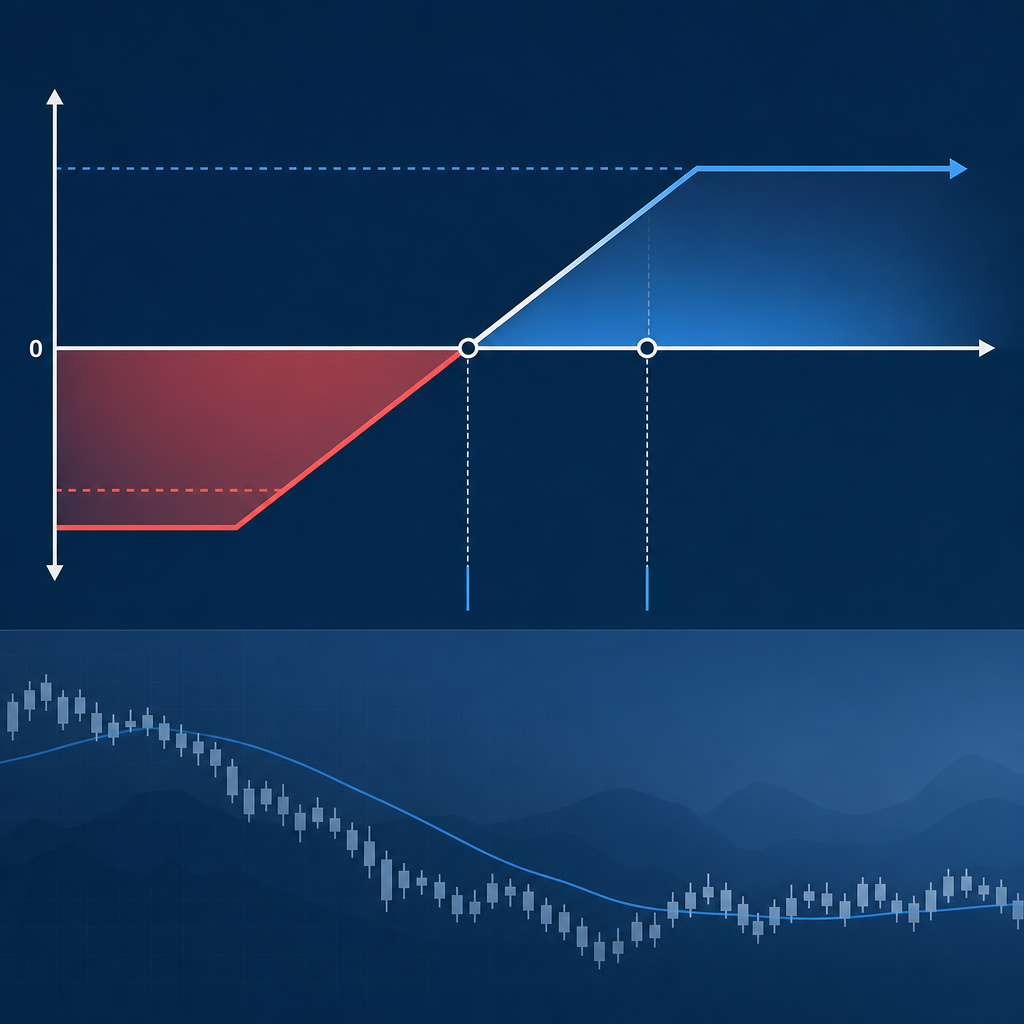
A bear call spread earns a limited credit when you expect the underlying to stay below a chosen level. You sell one call and buy another call at a higher strike, using the same underlying and expiry.
The bought call caps the loss. That cap is the main reason to prefer this structure over a naked short call.
How the trade works
Assume Nifty is near 24,000. The premiums below are illustrative, not taken from a live trade.
You sell the 24,300 call for ₹110 and buy the 24,500 call for ₹48. After paying for the hedge, ₹62 per unit remains as the net credit.
The distance between the strikes is 200 points. Since you already received 62 points, the most this spread can lose is 138 points per unit, before brokerage, taxes and slippage. Multiply both the credit and risk by the current exchange lot size before placing the order.
Your expiry break even sits near 24,362. Below 24,300, both calls expire worthless and you retain the full 62 point credit. Between 24,300 and 24,362, the position still has some profit left. Once Nifty finishes above 24,362, the spread moves into a loss and reaches its maximum loss at 24,500 or higher.
Do not place the two legs separately in a fast market. A sudden move between orders can leave you holding a naked short call.
Which market suits it?
There are four broad market conditions.
Bullish: This is the poor fit. A sustained rise can push the underlying through both strikes.
Bearish: The spread should make its maximum profit if the market falls, though the gain remains capped at the credit received. A long put may suit a trader expecting a sharp decline, but it brings premium decay and a different risk profile.
Neutral bullish: The trade can work when price rises slowly but stays below the short strike. Your room for error is smaller, so strike selection needs more care.
Neutral bearish: This is the cleanest setup. Price may remain range bound or drift lower while time decay works against the call premiums.
Look for a short strike above a price level that has repeatedly rejected buying. Selling too close to spot merely to collect a larger premium often produces an uncomfortable trade with little breathing room.
What result should you expect?
The maximum possible return is known at entry. In the example, it is the 62 point credit. You cannot earn more even if Nifty drops 1,000 points.
Actual profit can be smaller because you may exit early, pay transaction costs or face a wide bid ask spread. Before expiry, the position also reacts to implied volatility. A sudden volatility rise can show a temporary loss even while the underlying remains below the short strike.
There is no honest standard win rate for a bear call spread. Results depend on the strike distance, days left to expiry and exit rule. A spread sold far out of the money may win more often but pays little. Selling nearer to spot collects more credit while increasing the chance of a loss.
Where it fails
The obvious failure is a strong move above the short call strike. Gaps are particularly awkward because the spread can move close to its maximum loss before you get a reasonable exit.
The trade may also disappoint when implied volatility rises sharply. This matters more when several days remain before expiry. Time decay does not guarantee a daily profit.
Stock options need extra care near expiry because Indian stock derivatives can involve physical settlement. Index options are cash settled, but you should still check your broker’s expiry procedures and margin rules.
What to do when price moves against you
Decide the response before entry. Adjusting after the loss becomes uncomfortable usually leads to poor decisions.
- Use a price invalidation level. In the example, a close above 24,300 could be the exit signal if that strike was chosen around resistance. An intraday trader may need a stricter spot based rule instead of waiting for the close.
- A premium stop gives faster feedback. If the spread was sold for 62 points, you might decide to exit near 100 or 120 points. There is no universal multiple. Test the rule on the underlying and expiry you trade.
- Rolling needs a fresh reason. Close the existing spread first, then move to a later expiry or higher strikes only when the revised trade offers acceptable credit and risk. Rolling does not erase the loss already booked.
Holding until expiry is reasonable only when the remaining loss fits your plan and settlement risk is understood. The bought call limits the damage, but taking the full loss repeatedly can still drain an account.
Building the spread without strike errors
Manual setup requires the same underlying, expiry and quantity on both legs. The bought call must sit above the sold call. A wrong expiry or mismatched quantity changes the position completely.
Neostox has a prebuilt bear call spread template that selects the standard legs based on the underlying and chosen strikes. You can inspect it through a free trial account before placing or simulating the basket. Check the strikes yourself anyway. No template knows whether your resistance level is 24,300 or 24,500.
For the illustrative trade, the final question is simple: are you comfortable risking about 138 points to collect 62, and will you exit when your original price view fails?