
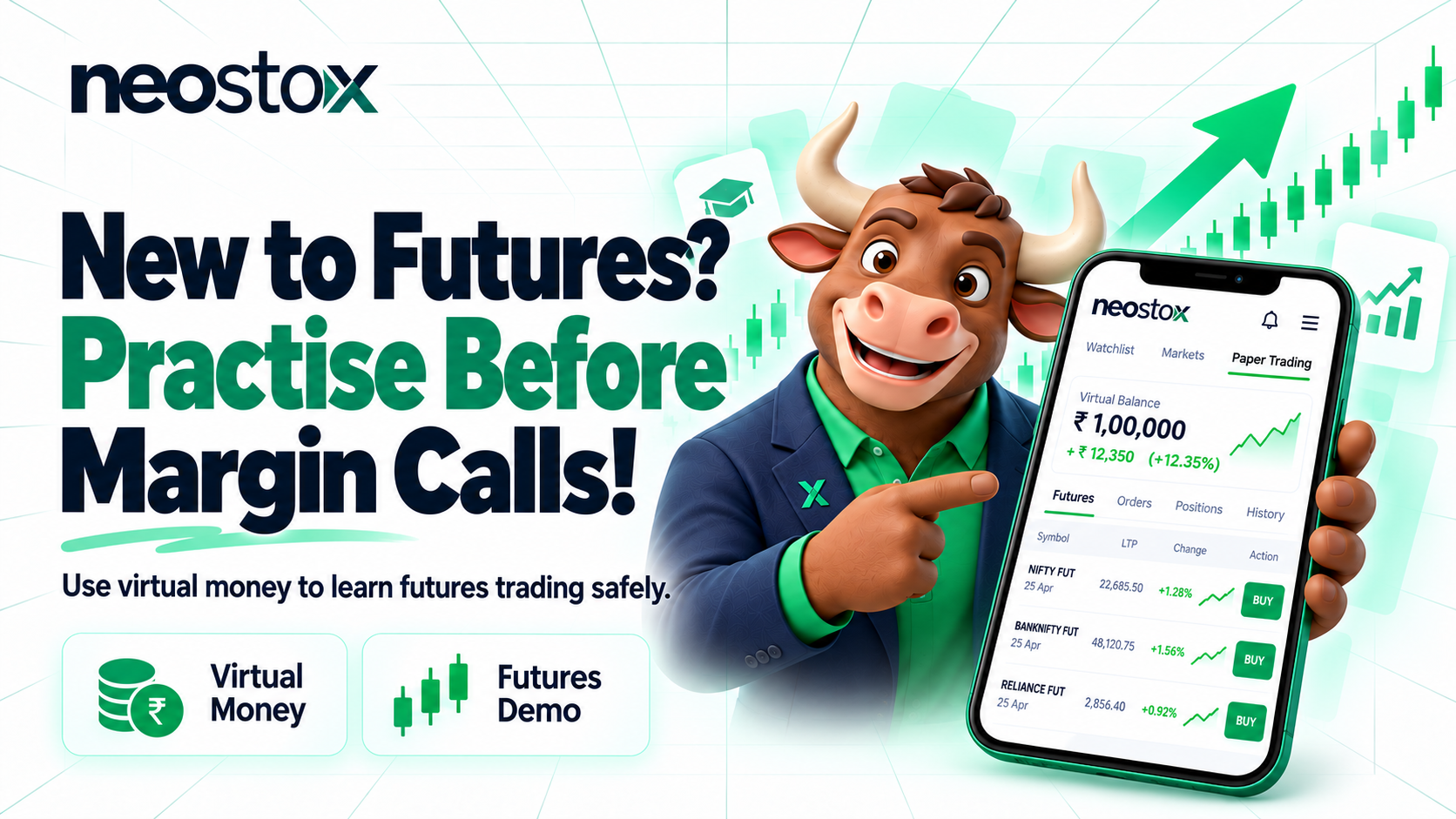
Futures move faster than they look on paper. Leverage is why. You put down a fraction of a contract's actual value, called margin, but your position gains or loses based on the contract's full size, not the small piece you funded. Push a trade against you far enough, and your broker calls, add money now, or the position gets shut automatically. No real debate about it either way. A demo or paper trading account gets around this safely, simulated futures orders, virtual money, the same margin math running underneath, minus the part where it actually hurts.
What exactly is a margin call?
Picture your account balance sitting against your open position. A margin call is what happens when that balance slips below the line your broker draws, the maintenance margin. Futures settle daily. Every trading day, gains and losses get run through your account, whether you've closed the position or not, a process called mark-to-market. Have one bad day, and that's often enough to push you under the line. From there, two options exist. Add funds fast, or your broker closes the position without asking twice.
Why does this hit futures harder than stocks?
Leverage is the short answer. Buying ₹1,00,000 worth of stock with ₹1,00,000 means your maximum loss, short of the stock going to zero, is roughly that amount. Controlling a futures contract worth ₹1,00,000 might only require ₹15,000 to ₹20,000 in margin, depending on the contract and current volatility requirements. That leverage cuts both ways, a move that would be a modest percentage loss on an unleveraged stock position can wipe out a much larger share of your actual margin on a futures position moving the same amount.
Daily mark-to-market compounds this. A stock position can sit unrealized, on paper, for as long as you hold it. A futures position settles in real money daily, so a string of bad days can erode your margin cushion fast, well before you'd planned to exit.
Where can you actually practise this before using real money?
Through a demo or paper trading account that specifically supports futures, not every simulator does, some cover equities only. You place simulated buy and sell orders on real futures contracts, using virtual capital, and the platform calculates margin requirements and daily settlement the same way it would for a real position, numbers included, consequences not.
Check this specifically before assuming a platform covers it. A simulator built mainly for stock practice may not model futures margin mechanics accurately, or may not include futures contracts at all.
What can a demo account actually teach you about margin calls?
Genuinely useful things. How margin requirements get calculated for a specific contract. How your account balance shifts with daily mark-to-market, even on a position you haven't closed. What it actually looks like on screen when your margin utilization climbs toward a dangerous level. These are mechanics, and mechanics transfer well from simulation to reality.
What it can't teach is the real pressure of an actual margin call, the moment your broker tells you to add funds within hours or watch your position close at a price you didn't choose. Virtual money removes that stress entirely, which is exactly why the mechanics are safe to practise, but it also means a demo account can't fully prepare you for how that pressure affects your decisions when real capital is on the line.
How should you actually practise this?
Use a virtual balance close to what you'd genuinely trade with, not an inflated number that makes every move feel consequence-free. Treat your demo margin utilization the way you would real margin, and notice how quickly it moves on a position that's going against you, since that speed is exactly what catches people off guard with real futures trading. Start with a more liquid, standardized contract, something like an index future, before experimenting with less liquid ones where price gaps can be sharper. And actually simulate a losing streak deliberately, not just your winning trades, since watching your virtual margin cushion shrink over several bad days teaches you more about risk than any single profitable trade will.
Neostox includes a paper trading feature covering futures alongside equities and options, letting you place simulated orders and see how margin and mark-to-market behave on NSE and BSE contracts using virtual capital.