
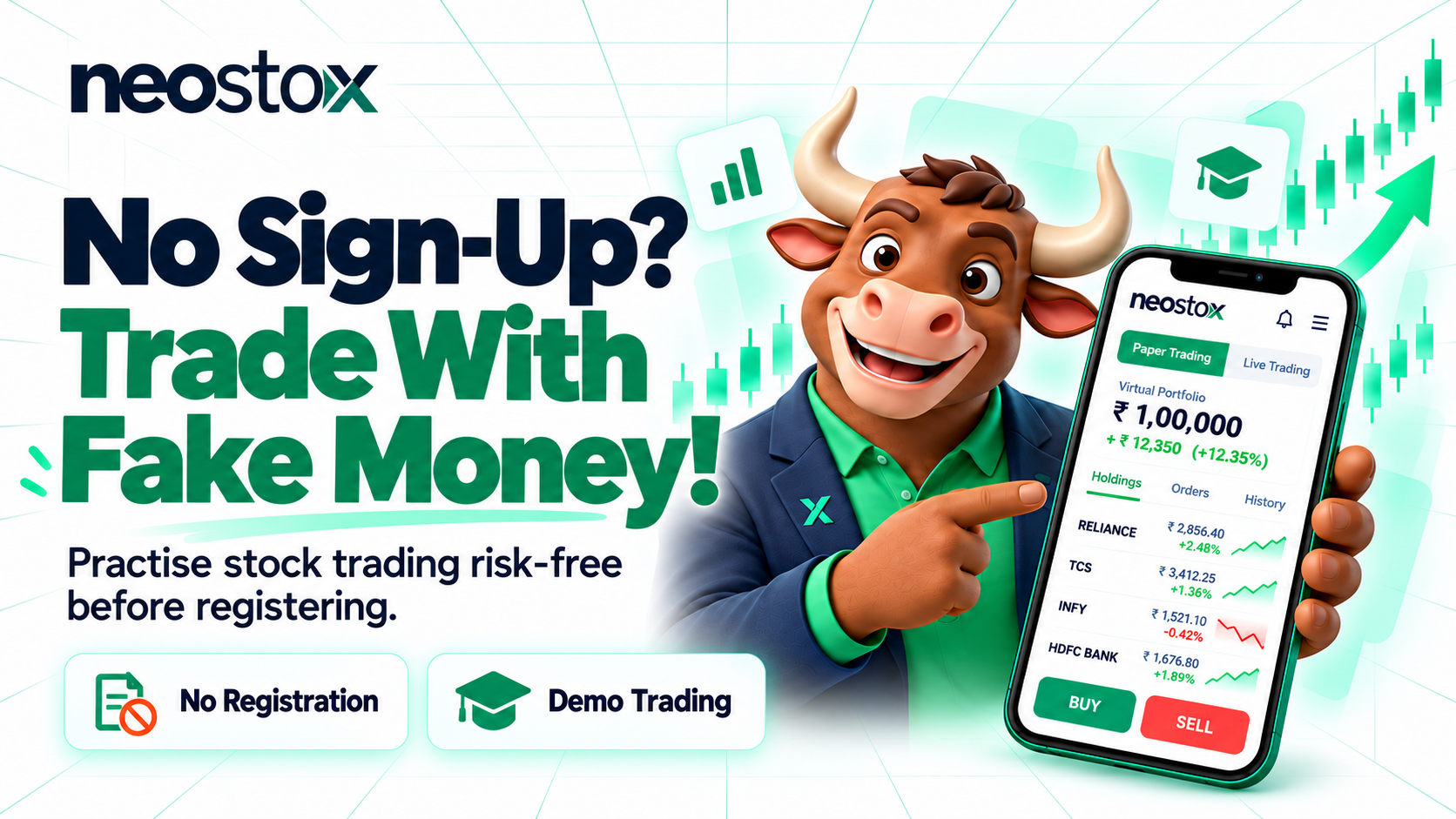
Mostly, no, not in the way most beginners picture it. Genuine paper trading, placing simulated orders on real stocks with virtual money, almost always requires creating a free account, since the platform needs somewhere to store your virtual balance, your open positions, and your trade history. What you can usually do without signing up is browse live-ish market data, read charts, and explore how an order screen looks. Actually placing a simulated trade and tracking its outcome is where account creation becomes necessary.
Why can't you just start trading fake money instantly?
Because a trade isn't a one-time action, it's a position that needs to be tracked. The platform has to remember what you bought, at what price, how many units, and what happens to that position as the market moves afterward. None of that can persist without somewhere to store it tied to you specifically, which is exactly what an account is for. A completely anonymous, no-signup system would lose your simulated portfolio the moment you closed the browser tab.
What can you actually do without creating an account?
More than nothing, less than full practice. Most trading platforms let you view charts, explore an index or stock's price history, and get a general feel for the interface without registering. Some offer a limited demo mode showing how an order ticket works, without letting that order actually execute or persist anywhere. This is useful for a first look, deciding whether a platform's layout makes sense to you, but it isn't the same as running a real simulated trade through to its conclusion.
Is signing up for a demo account actually risky?
Not financially, that's the entire appeal. A demo or paper trading account doesn't require funding with real money, and creating one doesn't put you on the hook for anything. The signup itself is usually just basic details, nothing that exposes you to the kind of risk people are often trying to avoid when they ask this question in the first place. The hesitation is understandable, but it's worth separating "I don't want to hand over my card details" (reasonable, and a demo account shouldn't ask for that) from "I don't want to create any account at all" (harder to work around, since tracking a simulated portfolio requires one).
What should you check before signing up anywhere?
A few things worth confirming first. Does creating the demo account actually require payment information upfront, or just basic registration details? Genuinely free paper trading shouldn't ask for card details before letting you practise. Does the platform let you delete the account easily later if you decide not to continue? And is the simulated environment actually built on real market instruments, not some simplified, made-up version of the market that won't teach you much.
Neostox offers a paper trading feature covering equities, futures, and options, where simulated orders run on actual NSE and BSE instruments once you've created an account, which only needs basic details to set up.