BLOG
Trading Apps in India: How to Compare Costs, Features, Reliability and Safety

Trading Apps in India: How to Compare Costs, Features, Reliability and Safety

24 views

"Best trading app" rankings tell you almost nothing useful, since what makes an app good depends entirely on what you're actually trying to do with it, and rankings rarely disclose their methodology anyway. What actually matters is checkable: real costs beyond the marketing headline, whether the features match your needs, how the app holds up when markets get volatile, and what security is actually built in. Here's how to evaluate any trading app on those terms yourself.

Read More


How to Choose a SEBI-Registered Stock Broker in India: Fees, Safety and Comparison Checklist

How to Choose a SEBI-Registered Stock Broker in India: Fees, Safety and Comparison Checklist

17 views

Most broker comparisons stop at brokerage rates and call it done. That's the least important question you should actually be asking. What happens to your shares if the broker shuts down? Is your money genuinely segregated from theirs? What are you paying that has nothing to do with the broker at all, statutory charges applied regardless of who you sign up with? This guide covers the full due-diligence checklist, not just the fee comparison.

Read More
Demat vs Trading Account in India: Opening Process, Charges, KYC and Beginner Guide

Demat vs Trading Account in India: Opening Process, Charges, KYC and Beginner Guide

34 views

Two accounts, one confusing overlap. A demat account and a trading account get opened together so often that beginners assume they're the same thing, they're not, and understanding the difference actually matters once you're checking charges or trying to figure out why a fee showed up. This guide covers both clearly, the opening process, the KYC documents you'll actually need, and exactly what you're being charged for and why.

Read More
Stock Market for Beginners in India: How NSE, BSE, Demat Accounts and Trading Work

Stock Market for Beginners in India: How NSE, BSE, Demat Accounts and Trading Work

22 views

Every beginner starts in the same place, a wall of terms, NSE, BSE, demat, that nobody stops to actually explain before assuming you already know them. This guide is that starting point. It covers what a stock exchange actually is, how the Indian stock market works day to day, what a demat account does, and how buying your first share actually happens, step by step. Where a topic goes deeper, choosing a broker, picking a trading style, specific instruments, this page points you to a dedicated guide rather than trying to cram everything into one place.

Read More
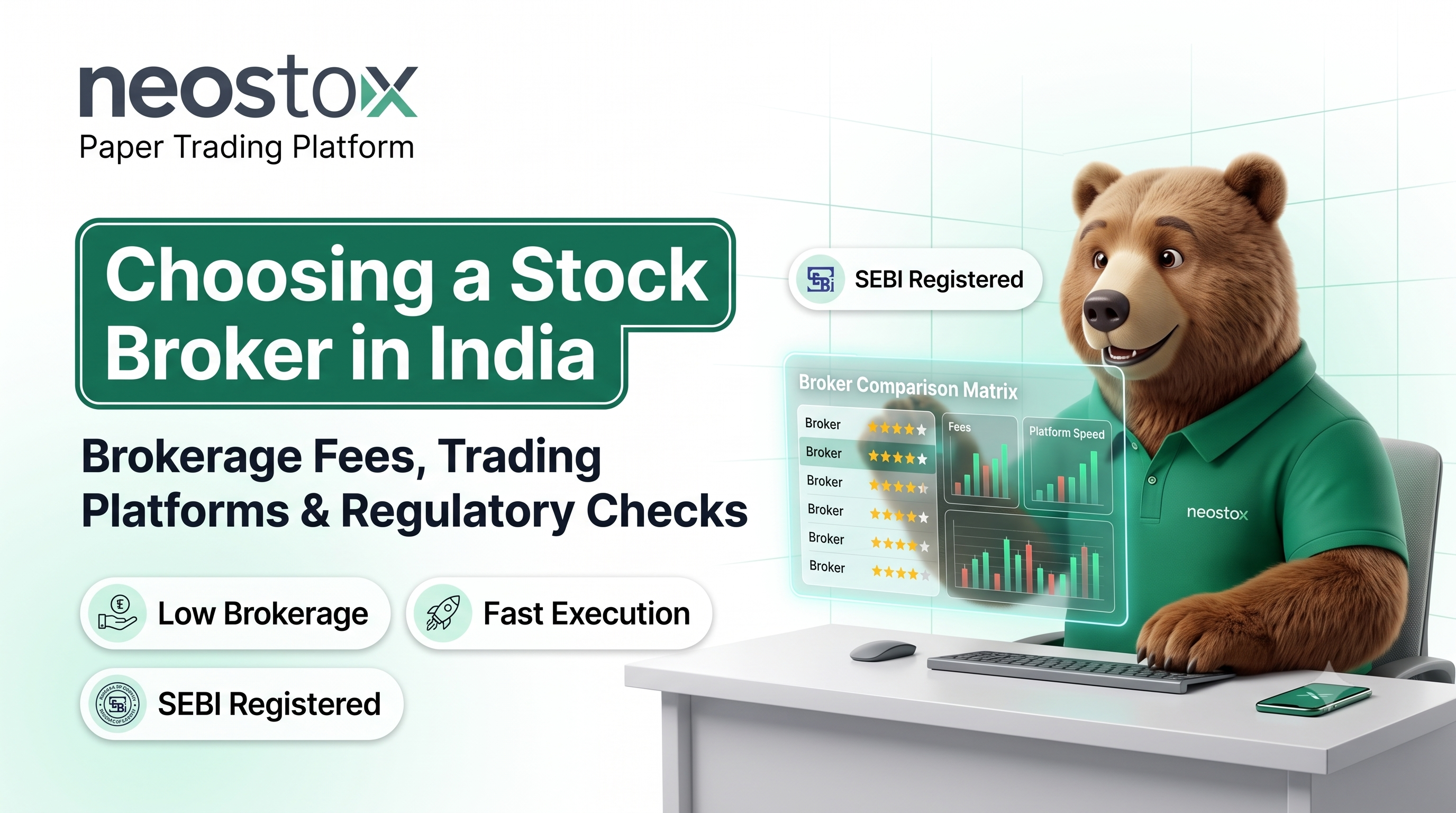
Choosing a Stock Broker in India

Choosing a Stock Broker in India

20 views

Every broker's homepage says the same things, lowest charges, fastest execution, best support. None of that means much without a way to actually check it yourself. Choosing a stock broker in India comes down to four real, checkable things: is it genuinely registered, what does it actually cost you, how reliably does it execute your orders, and what happens when something goes wrong and you need help. Here's how to evaluate each one properly.

Read More
Swing Trading Risk Management: Stop-Losses, Position Sizing & Overnight Risk

Swing Trading Risk Management: Stop-Losses, Position Sizing & Overnight Risk

51 views

How do you actually control downside when a trade stays open for several days, awake or not, watching or not? That's the real question underneath swing trading risk management, and it comes down to a few concrete, calculable pieces, not a vague sense of caution. Stop-loss placement, position sizing math, and a risk that day trading simply doesn't carry, overnight gaps. This guide covers all of it, with real formulas and a full worked example.

Read More
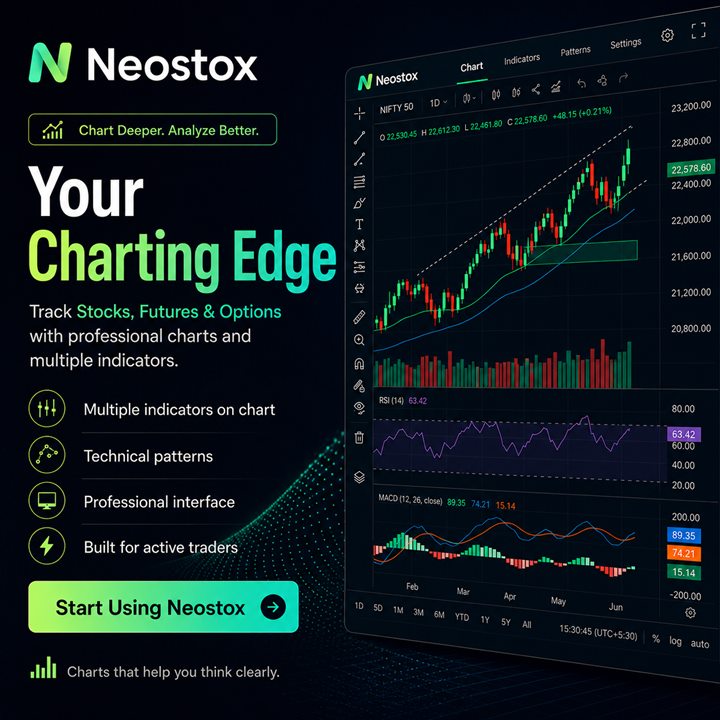
Swing Trading Indicators, Charts and Timeframes: What Each Tool Actually Measures

Swing Trading Indicators, Charts and Timeframes: What Each Tool Actually Measures

17 views

Most indicator guides teach you which button to click, buy when the line crosses here, sell when it crosses there, without ever explaining what the indicator is actually measuring underneath. That's backwards. Once you know what a tool measures, trend, momentum, volatility, or participation, you stop needing memorized rules and start reading the market directly. This guide covers exactly that, indicator by indicator, plus how to pick a timeframe and combine tools without stacking redundant signals.

Read More
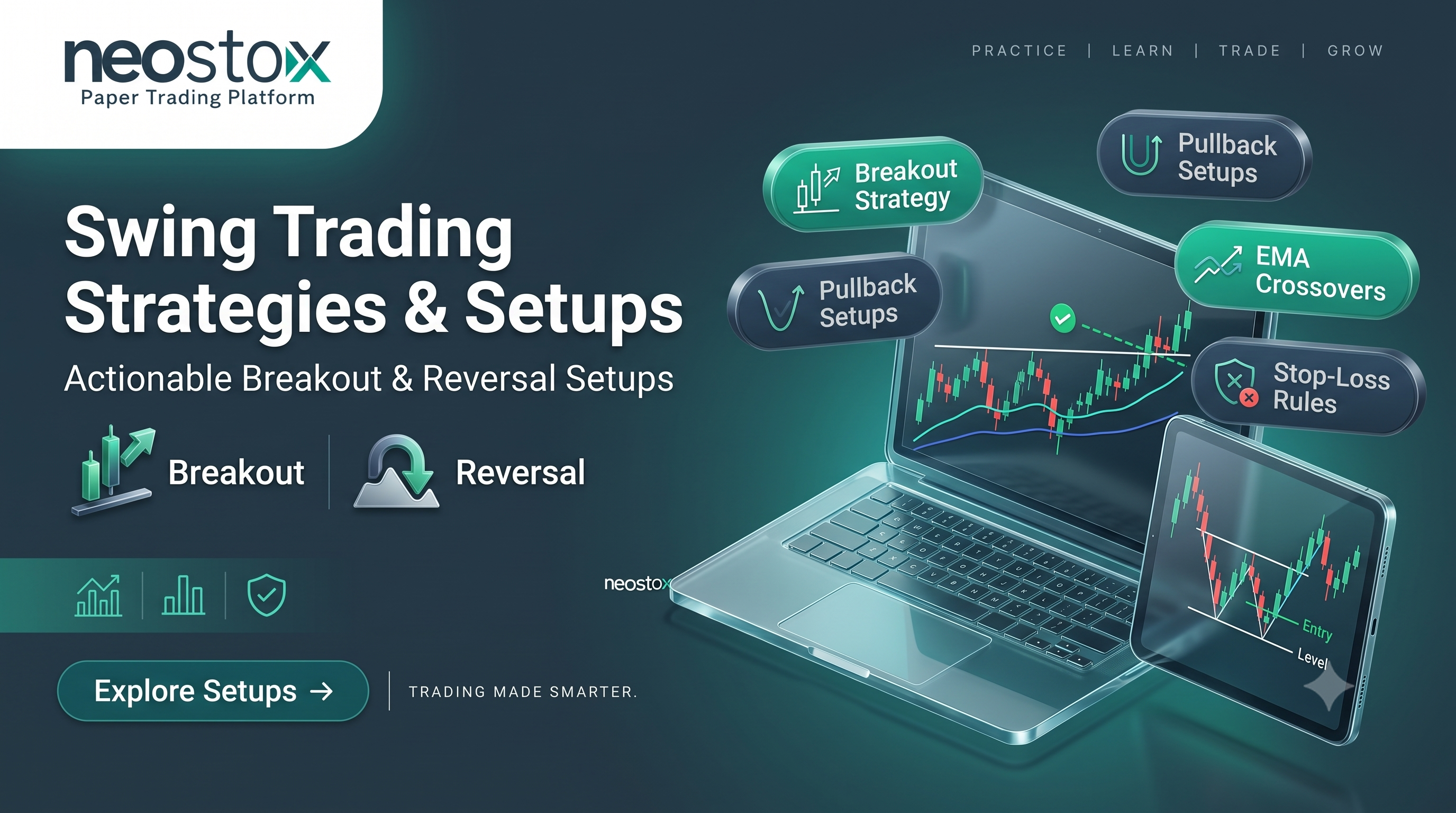
Swing Trading Strategies & Setups: Pullbacks, Breakouts, and Reversals Explained

Swing Trading Strategies & Setups: Pullbacks, Breakouts, and Reversals Explained

63 views

Every swing trading strategy, underneath the jargon, is really just a sequence. Something specific has to happen, in a specific order, before you enter. A trend has to pull back to a level. A range has to break out and hold. A price has to bounce off a level that's held before. This guide walks through the three main sequences swing traders actually use, pullbacks, breakouts, and reversals, plus the one rule that applies to all three: how you define your stop before you ever place the trade.

Read More
Swing Trading vs Day Trading vs Position Trading vs Long-Term Investing: What's Actually Different

Swing Trading vs Day Trading vs Position Trading vs Long-Term Investing: What's Actually Different

36 views

Four names, one underlying question, how long are you actually holding, and how much attention does that require from you? Day trading closes everything by the bell. Swing trading holds for days or weeks. Position trading stretches into months. Long-term investing thinks in years. Same markets, completely different rhythms. Here's exactly how each one differs, side by side, not just in theory but in what your actual week looks like doing each one.

Read More
What Is Swing Trading? A Beginner's Guide to How It Works

What Is Swing Trading? A Beginner's Guide to How It Works

18 views

Swing trading sits in the middle ground most beginners don't know exists, slower than day trading, faster than long-term investing. You're not watching a screen all session, and you're not holding for years either. You're capturing a price move that plays out over days, sometimes a couple of weeks, then getting out. This guide covers exactly how that works, what it actually demands of your time, and walks through one full example, start to finish, so the concept stops being abstract.

Read More
Can AI and ChatGPT Help With Trading? Practical Uses, Limitations and Free AI Workflows

Can AI and ChatGPT Help With Trading? Practical Uses, Limitations and Free AI Workflows

49 views

Most "AI for trading" content either oversells it, ChatGPT as a magic signal generator, or dismisses it entirely, a useless toy for a serious trader. Neither's honest. The real value sits in a specific, practical workflow: using free AI tools for research, prep, and pattern-spotting on your own data, then testing whatever comes out of that on a real platform before risking anything. Here's that workflow, laid out step by step, alongside the direct answers to whether any of this can actually make you money.

Read More
Is Day Trading Worth Learning? Starting Capital, Risks, Success Rates and Beginner Questions Explained

Is Day Trading Worth Learning? Starting Capital, Risks, Success Rates and Beginner Questions Explained

41 views

Should a beginner even bother learning day trading? Genuinely, yes, if you're approaching it as a skill worth building slowly, with real practice and honest expectations. Genuinely, no, if you're hoping it becomes fast income with minimal effort. Both of those are true at once, and which one applies to you depends entirely on how you actually approach the next few months, not on some secret only experienced traders know.

Read More
How Much Can You Realistically Make From Day Trading? ₹500, ₹5,000 and ₹1 Lakh Targets Explained

How Much Can You Realistically Make From Day Trading? ₹500, ₹5,000 and ₹1 Lakh Targets Explained

38 views

Every income question about day trading collapses into the same two numbers eventually, how much capital you're working with, and what return you're actually generating on it. Not a secret strategy. Not a special indicator. Just those two numbers, multiplied together. This piece walks through every version of that question people actually ask, ₹500 a day, ₹1 lakh a month, doubling your money fast, and gives each one the honest math instead of the motivational answer.

Read More